Change Windows Are Control Windows: Attesting Hypervisor and Firmware Maintenance in Regulated Estates

Photo: server rack firmware maintenance engineer data centre hardware diagnostics, via semarsoft.com
There is a particular kind of incident review that begins with the words "it was only a firmware update". The phrase is telling. It reveals a category error: the work was classified as routine change, scheduled against a maintenance window, and assessed for risk on the assumption that it sat beside the controls rather than underneath them.
In a regulated UK estate, firmware and hypervisor maintenance is not adjacent to the control environment. It is the substrate on which that environment rests. The control plane is not the orchestrator or the service mesh; it is the code that decides whether a virtual machine is running on this processor, with this memory encryption state, at this moment.
An ownership problem before it is a technical one
Ask who owns platform firmware in a large estate and the answer tends to fragment. Server hardware belongs to infrastructure. The hypervisor belongs to the platform team. Network card firmware belongs to networking. Storage controller firmware belongs to the storage group. The out-of-band management controller belongs to whoever last had a reason to log into it.
That diffusion is the root cause of most maintenance failures, because no single function holds the whole dependency graph. The technical failure is usually downstream: a device that did not reattach after a bus rescan, a storage path that failed over and did not fail back, a node that returned with a network interface bound to the wrong uplink. These are integration failures wearing the costume of a vendor bug.
Zero downtime is an integration claim
Live migration is often described as a hypervisor capability. In practice it is a set of preconditions, each owned by a different team. Processor feature compatibility across a cluster, storage visibility and consistent path presentation, network adjacency with adequate frame size, clock synchronisation, and identity consistent enough that the guest does not notice it has moved.
Where any precondition is unmet, the migration either does not happen or happens badly. Passthrough devices, single-root I/O virtualisation, pinned graphical workloads and very large memory pages all make a workload immovable, often without anyone recording that fact at design time. The estate discovers it during the window, at the point where the choice is to abort or to accept an outage.
Three safeguards are worth insisting on, and none of them are novel:
- A migration eligibility report produced before the window opens. If the proportion of non-migratable workloads exceeds an agreed threshold, the window does not proceed. This turns a judgement call made at two in the morning into a rule made in advance.
- Admission control headroom. Maintenance should never be scheduled into a cluster already running near its tolerance for failure. The remaining nodes must be able to absorb the evacuated load with the same redundancy they had before, not merely without breaching capacity.
- A tested return path. The previous image must be retained, retrievable and known to boot, and the out-of-band management path must have been exercised during the current quarter. An untested rollback is a hypothesis, not a control.
Attestation turns maintenance into evidence
Regulated estates are increasingly asked a question that patching reports cannot answer: what was running on that host on that date, and who approved the state it was in? The answer has to come from attestation — measured boot records, secure boot state, signed firmware images, and a configuration management database that holds the running version against the approved baseline rather than the baseline alone.
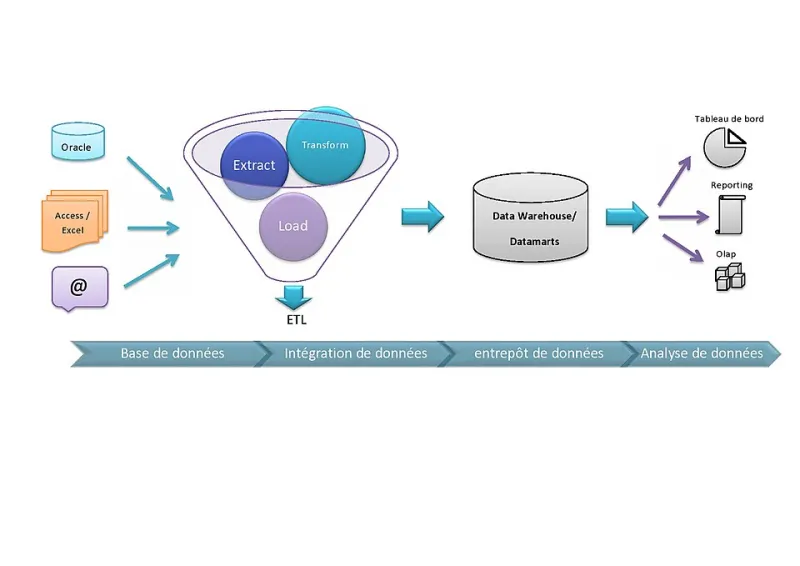
The integration work here is unglamorous but decisive. Attestation output needs to be collected automatically from management controllers and vendor tooling, normalised, hashed and timestamped, then flowed into the governance platform that already holds change records. Where that pipeline is manual, it decays within a quarter and the estate reverts to screenshots in a shared folder.
Retention matters too. Financial services firms typically need to demonstrate state over a multi-year audit horizon, which means attestation evidence must be immutable and retrievable years after the platform that produced it has been decommissioned. That is a data lifecycle problem, and it is usually discovered late.
Coordinating the supply chain
Multi-vendor estates have a coordination problem that no single vendor will solve. Release notes must be read against the actual deployed configuration, not the reference one. Known-issue lists need to be reconciled across hardware, hypervisor and driver layers before a window is booked, and there should be a standing do-not-deploy list with a named owner who can add to it without convening a committee.
End-of-life platforms deserve particular attention. A host that can no longer receive firmware updates is not a maintenance liability; it is a permanent exception that must be recorded, risk-accepted and reflected in placement rules. Regulators accept exceptions. They are considerably less forgiving of exceptions nobody documented.
The wider UK obligations frame this work — the operational resilience regime whose impact tolerance deadline passed in March 2025, the security expectations set out in the national cyber assessment frameworks, and sector rules on change management — but all of them converge on the same evidentiary demand: show that routine change did not quietly reduce the estate's ability to absorb failure.
What the evidence pack should contain
For each window, a defensible record is short and specific. The approved change record, linked to the runbook actually used. The pre-window eligibility and headroom assessment. Migration and evacuation logs. The post-change attestation report showing running versions across every node in scope. Verification test results, distinct from monitoring being green. And a rollback decision log, including decisions not to roll back.
Rehearsing the rollback is the part most estates skip. It is also the part that converts a maintenance programme from a hope into a control. A change window is not the interval in which the estate stops being regulated. It is the interval in which the controls are most exposed, and the only credible way to demonstrate otherwise is to hold the evidence before anyone asks for it.