Doors Left Ajar: Testing the Five Break-Glass Paths That Quietly Accumulate
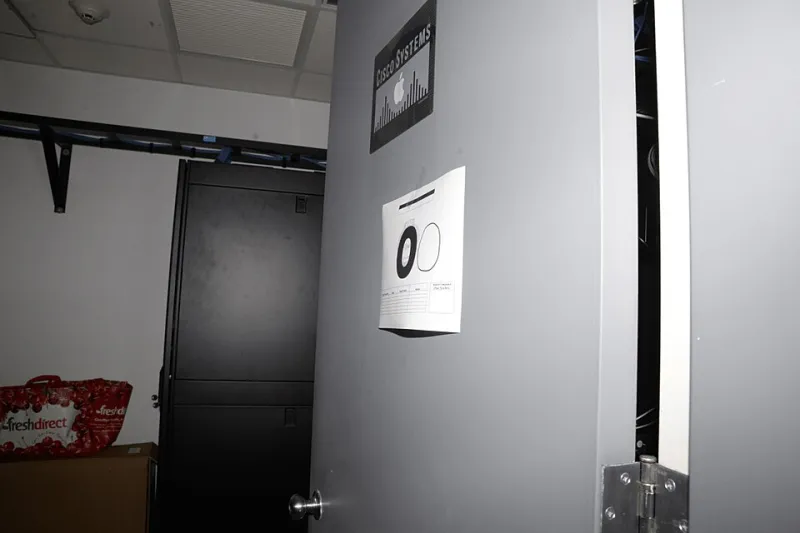
Photo: Federal Bureau of Investigation, Public domain, via Wikimedia Commons
Break-glass access occupies an uncomfortable position in most estates. It exists because the normal route might fail, and it is therefore essential. It is also, by design, an exception to the controls that normally apply, and it is therefore dangerous. The tension is not resolvable, only governable, and governance requires testing.
What follows is a practical audit of five emergency access paths that accumulate in UK enterprise environments. Each has a legitimate origin. Each tends to persist beyond the circumstances that justified it. And each is frequently assumed to work without anyone having attempted it under realistic conditions.
Why break-glass testing differs from a password reset
A break-glass test is not a credential rotation exercise. Rotation confirms that a secret exists and has been changed. Testing confirms that the path actually delivers access, to the right person, under the conditions in which it will be needed, with a record that survives the event.
That distinction matters because the failure modes are rarely about the secret itself. They are about network paths that no longer route, conditional access policies that block the emergency account along with everyone else, hardware tokens stored in a building nobody can enter, and documentation that describes an interface decommissioned two years ago.
The first path: local administrator accounts on legacy hosts
Every estate of a certain age carries local administrator accounts on hosts that predate centralised directory control: appliance management interfaces, legacy application servers, industrial or building-management kit, and the occasional virtualisation node.
These accounts are typically documented in a spreadsheet, with credentials in a vault that may or may not be reachable when the identity provider is unavailable. The testing question is not whether the credential is correct but whether it can be retrieved and used when the normal authentication chain is down.
A defensible test retrieves the credential through the documented mechanism, authenticates to a representative host, performs a defined action, and records the outcome. Where retrieval depends on a service hosted in the same environment that has failed, the path is not break-glass; it is a second dependency on the same single point of failure.
The second path: identity provider bypass
Most organisations now have a documented emergency account that bypasses conditional access, federation or multi-factor requirements. Fewer have tested it recently, and fewer still have confirmed that the bypass survives policy changes made since it was created.
Conditional access policy is the usual culprit. A policy that blocks legacy authentication protocols, restricts access by location, or requires device compliance will apply to the emergency account unless explicitly excluded. Exclusions are created and then lost during policy refactoring. The result is an emergency account that exists, is documented, and is refused at the point of use.
The test should be performed from outside the corporate network, using the device and network conditions an operator would realistically have during a major incident, and should confirm both that access is granted and that the access is logged to a destination that survives the incident.
The third path: out-of-band management
Baseboard management controllers, console servers and serial concentrators provide access when the operating system or network stack is unavailable. They are among the most valuable break-glass assets in any estate and among the least frequently exercised.
Common failures are mundane. Firmware updates change default behaviour. Management networks are renumbered during a data centre move and the console server is missed. Credentials are rotated on the in-band estate and not on the out-of-band estate. Certificates on management interfaces expire, and the browser refuses the connection at precisely the wrong moment.
Testing should include an actual console session, with a documented credential retrieval step, from a location outside the primary management network. For UK estates with colocation presence, the test should also confirm that remote-hands procedures align with what the out-of-band path requires, since the two are often documented separately and drift apart.
The fourth path: vendor support credentials
Third-party support access is a break-glass path in all but name. It exists to let a vendor restore service quickly, it carries elevated privilege, and it is frequently governed by a contract rather than by an access control.
The questions to evidence are specific. Which accounts exist, held by which vendors, for which systems? When were they last used, and was that use authorised and reviewed? Do they expire automatically, or does expiry depend on a manual step that nobody owns? Is the access time-bound and session-recorded, or is it a standing credential with a long password?
A test here is less about attempting login and more about proving the lifecycle: that a vendor account can be raised on request, used under supervision, reviewed afterwards and closed within a defined period. Where a vendor cannot support that model, the risk acceptance should be explicit and time-limited rather than implicit and permanent.
The fifth path: physical access procedures
Physical break-glass is the path most often assumed and least often rehearsed. Keys, access cards, sealed envelopes and site binders are distributed across facilities teams, service partners and occasionally individuals who have since left the organisation.
The test should establish that an authorised responder can actually enter the relevant space out of hours, that the alarm and access-control records capture the entry, and that the documentation inside the space matches the systems present. It should also confirm that seal numbers and tamper evidence are checked on entry and reconciled afterwards.
For organisations using colocation, the equivalent test is a timed remote-hands request: how long does it take, what authorisation is required, and does the provider's record of the work match what your own team expected?
Turning tests into evidence
Each of the five paths should have a register entry containing the path description, the named owner, the documented procedure, the last test date, the outcome, and any remediation with a target date. Tests should be scheduled, not opportunistic, and should rotate so that no path goes untested for more than twelve months.
Results belong in the operational resilience evidence set, not only in a security backlog. The argument to a committee is straightforward: these are the routes by which service will be restored if normal control fails, and here is dated proof that they function. A break-glass path that has never been tested is not a control. It is an assumption, and assumptions are what incidents test on your behalf.